“growth Zone” search results (400)

Chocolate Rhyme of El Salvador Mercedes Manor Coffee Flavor description characteristics of varieties
Topography El Salvador domestic topography to mountains, plateaus, multi-volcanic, known as the country of volcanoes, Santa Ana active volcano 2385 meters above sea level, for the country's highest peak; the north of the country for the Lompa River Valley, the south for the narrow coastal plain. Climatic characteristics the whole of El Salvador has a tropical climate, with an annual average temperature of 28 ℃; dry season from November to April and rainy season from May to October; coastal areas
2016-10-08 Chocolate Rhyme El Salvador Mercedes des Manor Coffee Flavor description
Coffee tree common sense introduction
The coffee tree is native to Ethiopia in Africa. Coffee tree in botany, belongs to the Rubiaceae coffee subgenus evergreen tree, and generally known as coffee beans, in fact, coffee tree fruit seeds, only because of the shape like beans, so called coffee beans.
2014-07-17 Coffee knowledge coffee tree knowledge coffee encyclopedia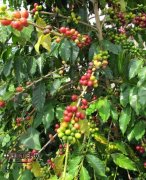
Basic knowledge of boutique coffee varieties of coffee trees
Coffee is a perennial evergreen shrub or small tree of Rubiaceae. It is a horticultural perennial cash crop with the characteristics of fast growth, high yield, high value and wide market. Wild coffee trees can grow to a height of 5 to 10 meters, but coffee trees planted on the manor are often cut to less than 2 meters in order to increase their fruit and facilitate harvesting. The opposite leaves of coffee trees are long oval.
2015-01-31 Boutique coffee basics varieties grasses perennials evergreens shrubs
Aromatic Colombia fine coffee beans Flavor Taste Manor Features
Colombia's favourable climate provides a truly natural pasture for coffee. Coffee trees in Colombia are mainly cultivated in the Andes mountains, on steep slopes up to 1,300 meters above sea level, where the annual temperature is about 18 degrees Celsius, the annual rainfall is 2000 to 3000 mm, the latitude is 1 - 11 15, the longitude is 72 - 78, and the specific altitude range can exceed 2.000 meters. by
2016-08-11 Aroma Rich Colombia Fine Coffee Bean Flavor Taste Manor Region
Coffee tree
Coffee trees are evergreen shrubs or trees belonging to the Rubiaceae family. Wild coffee trees can grow to a height of 5 to 10 meters, but coffee trees planted in the manor are often cut to a height of less than 2 meters in order to increase fruit and facilitate harvesting. The opposite leaf of the coffee tree is long oval, the leaf surface is smooth, the end branch is very long, the branch is few, and the flower is white, opening at the base of the petiole connecting the branch.
2014-07-02 Coffee tree coffee tree variety coffee bean
Rich flavor of Columbia Coffee Manor. Introduction to Lasmus Manor.
The suitable climate in Colombia provides a real natural pasture for coffee. Coffee trees in Colombia are mainly cultivated in the Andes, on steep slopes about 1300 meters above sea level, where the annual temperature is about 18 degrees Celsius, annual rainfall is 2000 to 3000 millimeters, latitude 1-11 15 north, longitude 72-78 west, and the specific range of elevation can exceed 2.000 meters. By
2016-08-04 Aroma rich Columbia coffee manor producing area flavor taste introduction pull
Colombia fine coffee beans with rich aroma Cauca region introduction
Colombia's favourable climate provides a truly natural pasture for coffee. Coffee trees in Colombia are mainly cultivated in the Andes mountains, on steep slopes up to 1,300 meters above sea level, where the annual temperature is about 18 degrees Celsius, the annual rainfall is 2000 to 3000 mm, the latitude is 1 - 11 15, the longitude is 72 - 78, and the specific altitude range can exceed 2.000 meters. by
2016-07-13 Aroma Intense Colombia Fine Coffee Bean Cauca Region
Introduction to the Flavor characteristics of six Coffee producing areas in Colombia what grade of Colombian Coffee beans is Huilan
Colombian coffee is located in the Andes, where the mild climate, humid air and good rainfall make it very suitable for coffee growth. According to its geographical location, Colombian coffee is divided into three producing areas: northern, central and southern, in which it has six high-quality coffee producing areas of Colombian origin, SierraNev.
2022-12-11 Colombia Coffee six producing areas introduction Columbia cafe
Introduction to Galapagos Coffee producing area
Because of the unique role of the Galapagos Islands in the course of history, the Government of Ecuador has designated the Galapagos Islands as a national park, the land is no longer allowed to be reclaimed as new agricultural land, and the introduction and use of chemical fertilizers, pesticides, herbicides and other chemicals are strictly prohibited, so coffee produced in the Galapagos Islands is recognized as a natural product. Ecuador ES Coffee South Ecuador
2016-07-27 Ecuador coffee flavor taste introduction Lapa Goss producing area due to pull
Cultivation conditions of coffee "coffee belt" (Coffee Belt)
There is a noun called Coffee Belt. There are more than 60 coffee producing countries in the world, most of which are located in the tropics and subtropics between the Tropic of Cancer (latitude 2326). This coffee growing area is called a coffee belt or coffee area (Coffee Zone). The annual average temperature of the coffee belt is above 20 ℃, because the coffee tree is a tropical plant, and if the temperature is below 20 ℃,
2015-11-06 Coffee cultivation conditions coffee belt Belt there is a noun
What are the cultivation techniques of coffee trees? what is the reason for the astringency of coffee?
It is required that the origin of coffee tree [4] is in Ethiopia in Africa. In botany, coffee trees belong to the evergreen trees of the subgenus Rubiaceae, and coffee beans, commonly known as coffee beans, are actually the seeds of the fruit of coffee trees. They are called coffee beans only because they are shaped like beans. Climate is the decisive factor for coffee cultivation. Coffee trees are only suitable for growing in the tropics or subtropics, so the south
2016-06-08 Coffee what cultivation techniques what is why requirements coffee origin Africa
What's the difference between Arabica and Robusta?
The world's coffee beans are mainly divided into two categories: small seed coffee bean Arabica (Arabica) and medium seed coffee bean Robusta (Robusta). Small seed coffee beans grow in the temperate zone and climate of Haiba, with a rich and delicate taste, strong smell, high acidity and smooth texture, bringing strong aroma and smoothness to the coffee. Medium seed coffee bean is just like its English name Ro.
2015-11-02 Arabica Robusta what the difference the whole world coffee beans
The only coffee type in the United States, Hawaiian Kona Coffee with a long history.
Kona Coffee has a long history. In 1828, the missionary Lagers first introduced the bourbon species from Brazil, but in 1892 he introduced Tibica from Guatemala. Farmers found that iron is more adaptable to water and soil than cards, so they completely replanted Guatemalan Tibica, becoming today's famous variety Kona Typica. The Kona coffee on the big island is planted at an altitude of about 300 to 1.
2015-02-12 United States only coffee species long history Hawaii Cona Coffee.
Coffee tree
Coffee tree coffee (Xoffea arabica Linn) coffee is a perennial evergreen shrub or small tree of Rubiaceae. It is a horticultural perennial cash crop with the characteristics of fast growth, high yield, high value and wide market. Wild coffee trees can grow to 5 to 10 meters high, but coffee trees planted on manors are often cut to less than 2 meters in order to increase fruit and facilitate harvesting.
2014-08-08 Coffee knowledge planting of coffee trees coffee encyclopedia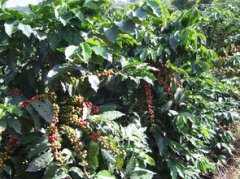
Coffee knowledge what conditions are needed for coffee cultivation
There is a noun called Coffee Belt. There are more than 60 coffee producing countries in the world, most of which are located in the tropics and subtropics between the Tropic of Cancer (latitude 2326). This coffee growing area is called a coffee belt or coffee area (Coffee Zone). The annual average temperature of the coffee belt is above 20 ℃, because the coffee tree is a tropical plant, and if the temperature is below 20 ℃,
2015-03-06 Coffee knowledge cultivation needs what conditions there is a noun called coffee.
Characteristics of Colombia Coffee Beans
Colombia's favourable climate provides coffee with a truly natural pasture. Coffee trees in Colombia are mainly cultivated in the Andes, on steep slopes up to 1,300 meters above sea level, where the annual temperature is about 18 degrees Celsius, the annual rainfall is 2000 to 3000 mm, the north latitude is 1 - 11 15, and the west longitude is 72 - 78. The specific range of altitude can be exceeded.
2016-06-12 Colombia coffee beans characteristics cultivation environment edit suitability gas
The main classification of coffee in the coffee producing kingdom
Coffee trees are very similar to laurel and usually grow between the Tropic of Cancer and the Tropic of Cancer. A coffee tree usually grows for about three to four years before it begins to bear fruit. the fruit is a red berry and a small number of yellow berries. After drying and removing the pulp, the coffee beans can be separated. There are shadows of coffee beans all over the world, as long as the climate is right.
2016-05-25 Coffee production kingdom main classification coffee laurel extremely similar evergreen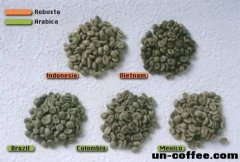
Coffee classroom: the difference between Arabica and Robusta coffee beans
The world's coffee beans are mainly divided into two categories: small seed coffee bean Arabica (Arabica) and medium seed coffee bean Robusta (Robusta). Small seed coffee beans grow in the temperate zone and climate of Haiba, with a rich and delicate taste, strong smell, high acidity and smooth texture, bringing strong aroma and smoothness to the coffee. Medium seed coffee bean is just like its English name Ro.
2014-07-23 Coffee lecture hall coffee bean classification coffee bean type coffee bean difference coffee encyclopedia
Introduction of Colombian Coffee Bean Flavor Manor
The suitable climate in Colombia provides a real natural pasture for coffee. Coffee trees in Colombia are mainly cultivated in the Andes, on steep slopes about 1300 meters above sea level, where the annual temperature is about 18 degrees Celsius, annual rainfall is 2000 to 3000 millimeters, latitude 1-11 15 north, longitude 72-78 west, and the specific range of elevation can exceed 2.000 meters. By
2016-07-22 Taste soft slippery Columbia coffee beans flavor manor producing area introduction
Introduction to cultivation techniques of Coffee Fruit
Cultivation techniques require that the origin of coffee trees [4] is in Ethiopia in Africa. In botany, coffee trees belong to the evergreen trees of the subgenus Rubiaceae, and coffee beans, commonly known as coffee beans, are actually the seeds of the fruit of coffee trees. They are called coffee beans only because they are shaped like beans. Climate is the decisive factor for coffee cultivation, and coffee trees are only suitable for growing in the tropics or subheat.
2016-06-13 Coffee fruit cultivation techniques introduction requirements coffee origin non-